



Why football pitch covers matter for fixture protection at Deepdale
Football pitch covers are a key part of modern stadium operations, helping grounds teams protect the playing surface when conditions threaten playability. For clubs managing tight fixture schedules, broadcast commitments and supporter expectations, the priority is simple: keep the pitch in the best possible condition and reduce avoidable disruption.
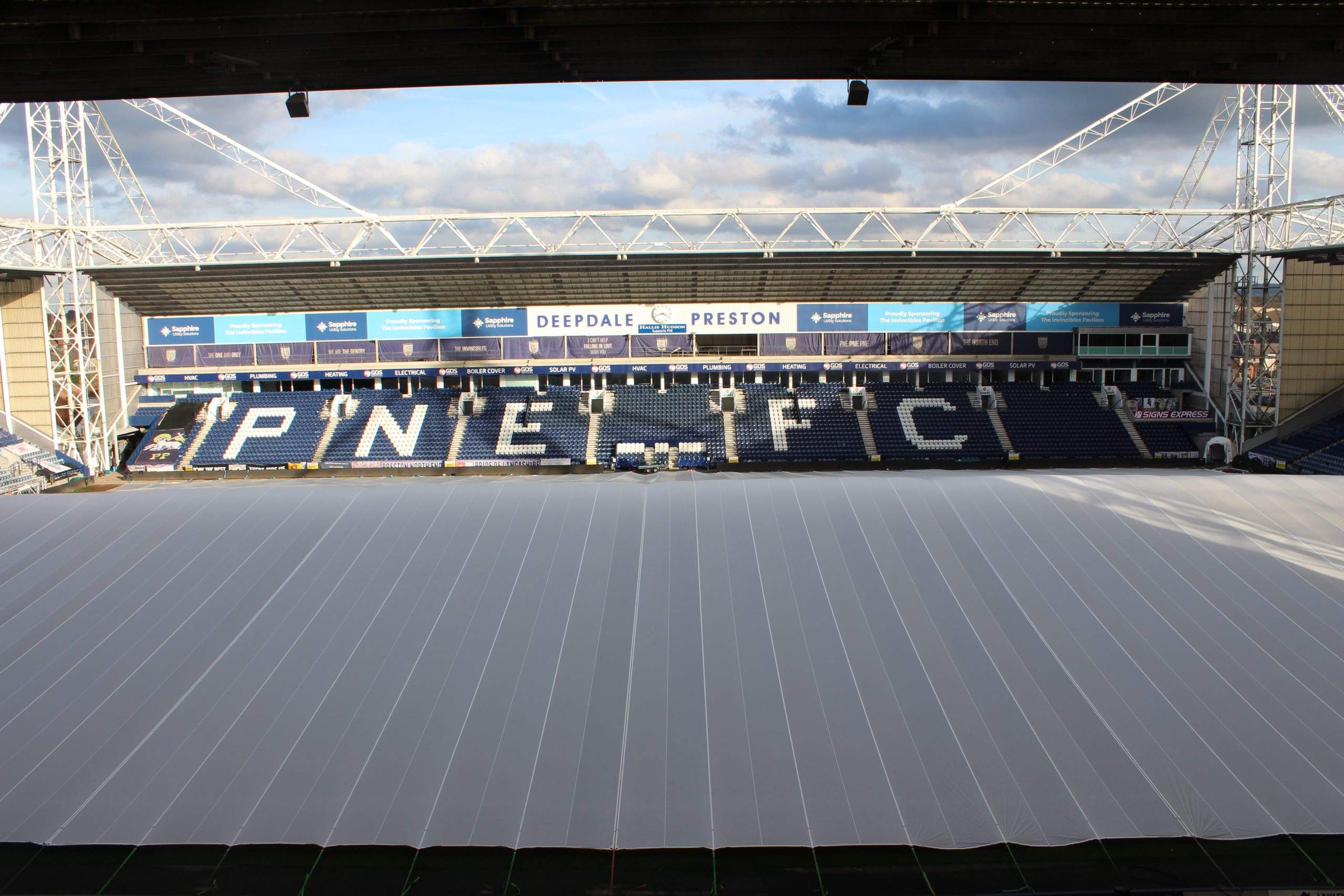
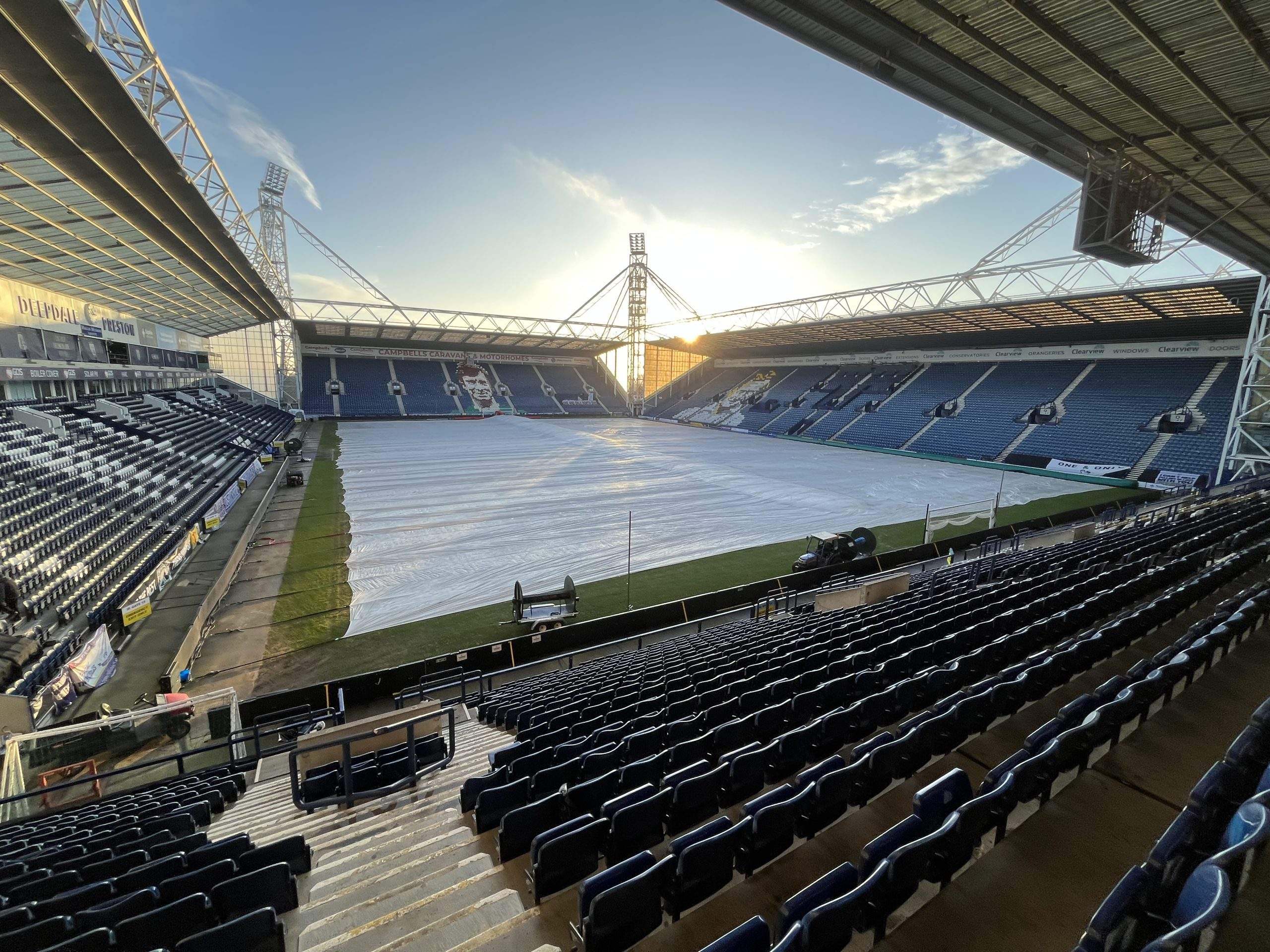
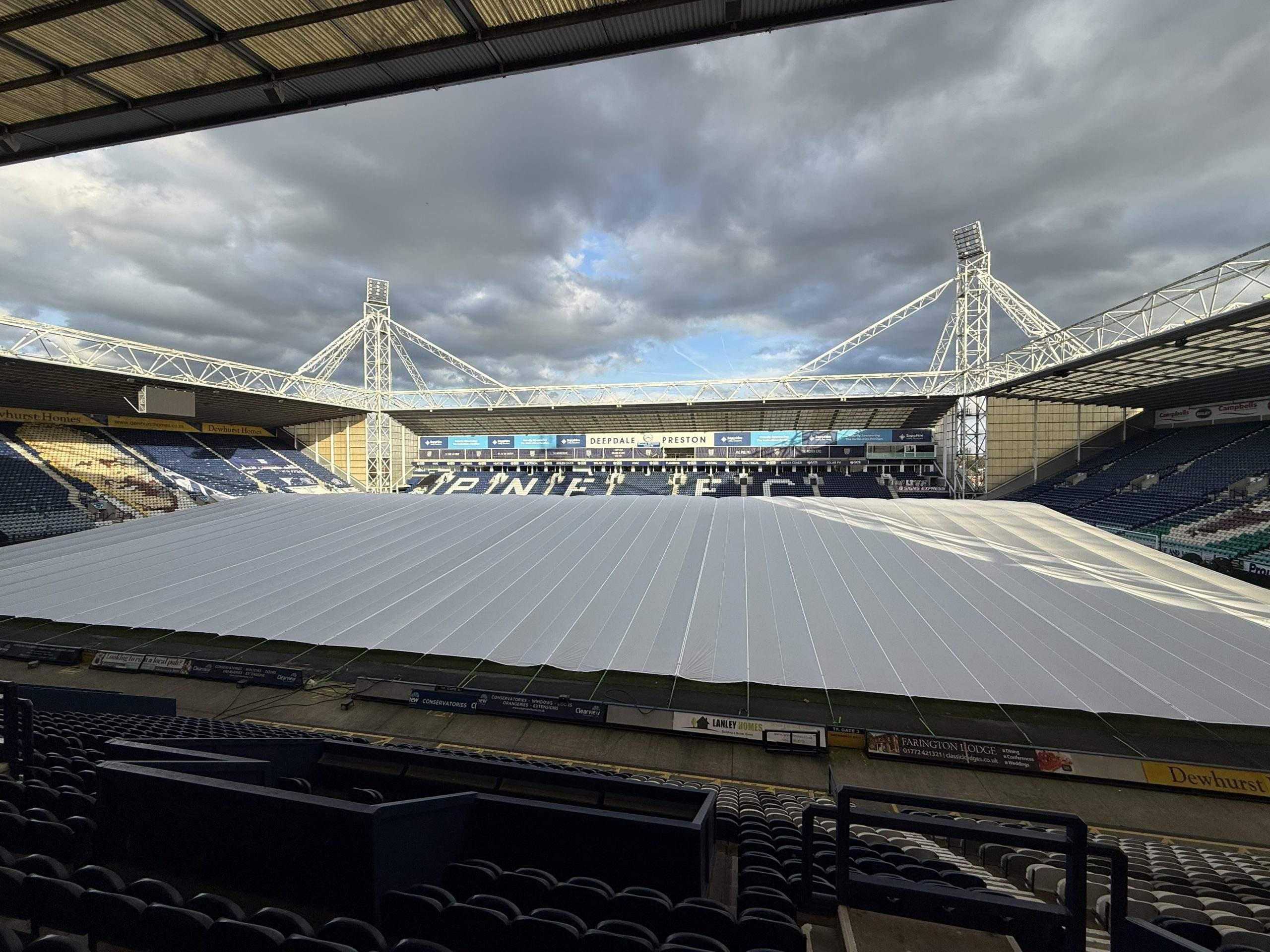
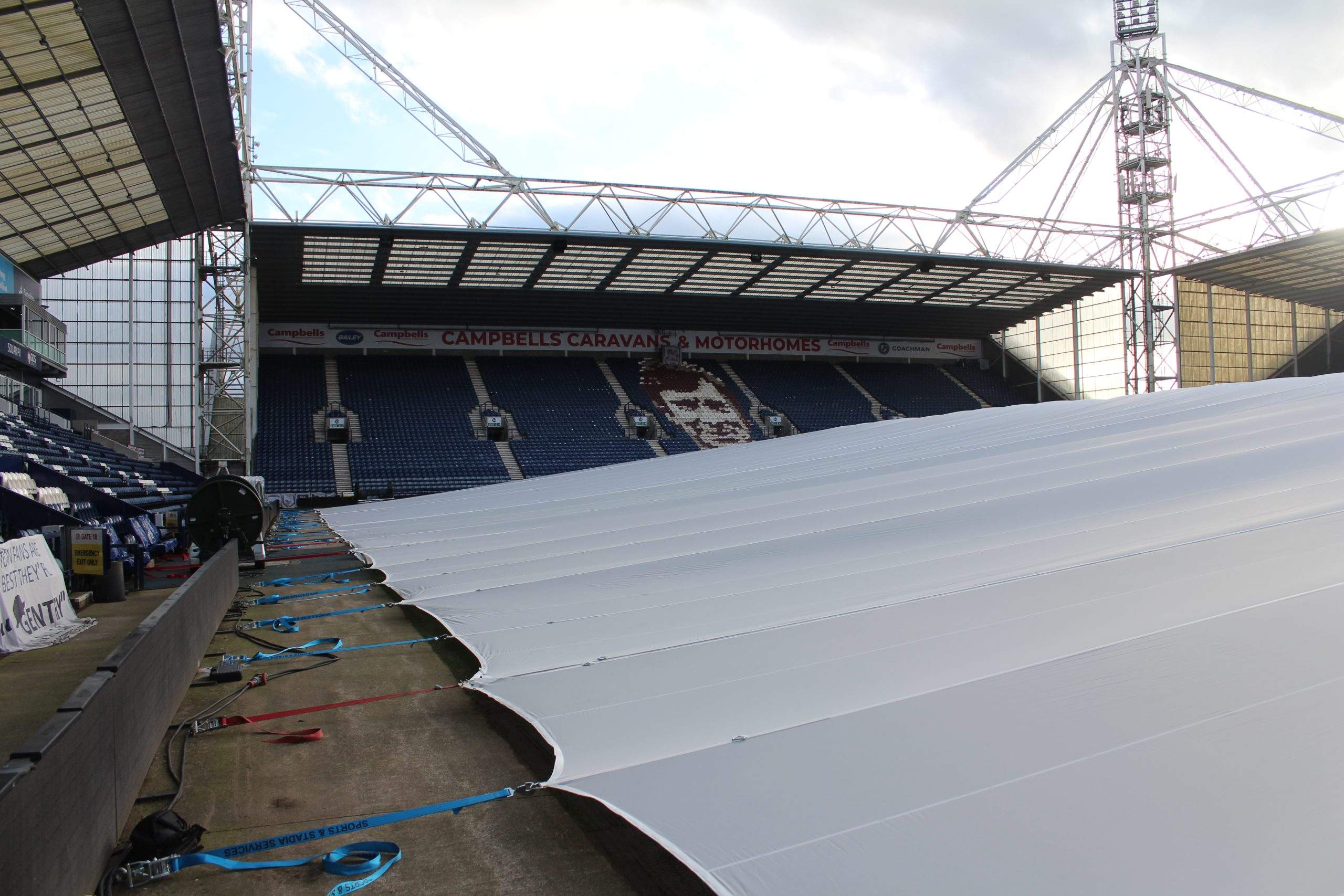
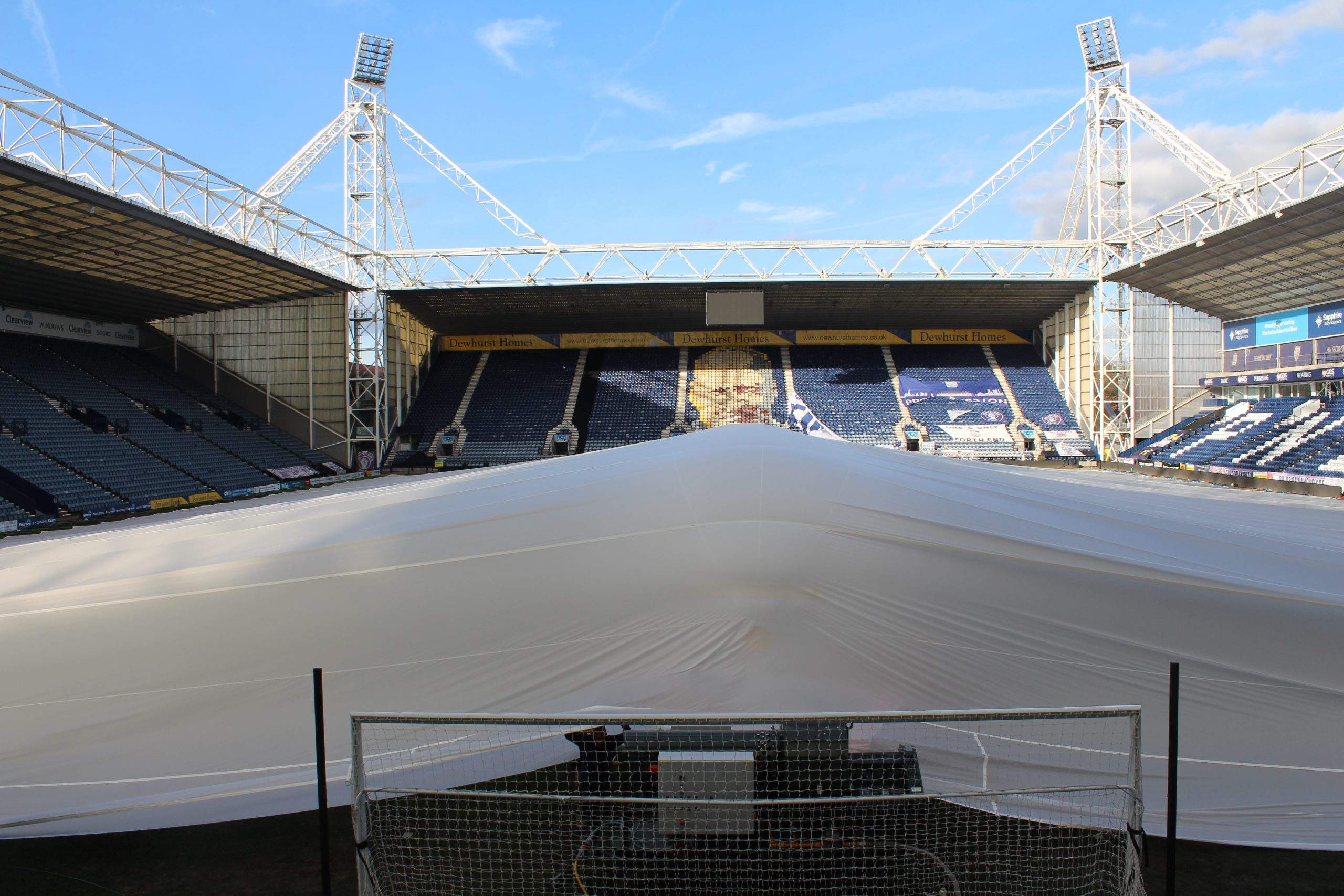
At Deepdale, Preston North End FC have taken ownership of a bespoke MacLeod Cover System following its use on multiple occasions under retainer agreements delivered by Sports & Stadia through The FA and the EFL. Moving to ownership gives the club greater control over when protection is deployed, how it is operated, and how it supports long-term playing surface standards across the season.
For Preston, the motivation is to manage multiple winter risks, utilising the system to help control rainfall, protect against extreme cold, and support grass growth through the late autumn and mid-winter months.
Choosing flat vs raised systems
Not all football pitch covers are the same. In broad terms, clubs may consider flat cover options, often used primarily for frost protection, or raised systems designed to create and hold a managed environment above the turf.
A flat cover sits directly on the surface. It does what it is designed to do. Where the requirement is frost protection ahead of a specific fixture, a flat cover can meet it.
A raised system is typically specified when the objective extends beyond protecting against a single event. Holding a volume of air above the turf allows the grounds team to influence the conditions the grass is actually growing in, across days rather than hours, and through the part of the season when natural recovery is slowest. That distinction matters most to clubs who need the surface to keep improving through winter, not simply survive it.
The right choice depends on the stadium’s pitch profile, storage and access constraints, staffing, and how much control the grounds team wants over the surface environment. It also depends on what the club already has in place. In practice, that is where the decision stops being about the cover in isolation and becomes a question of how it fits the wider pitch management operation.
Every system is tailored to the venue itself, including pitch dimensions and the perimeter pitch environment, so the final configuration supports safe, repeatable deployment in real stadium conditions.
Working alongside current technologies
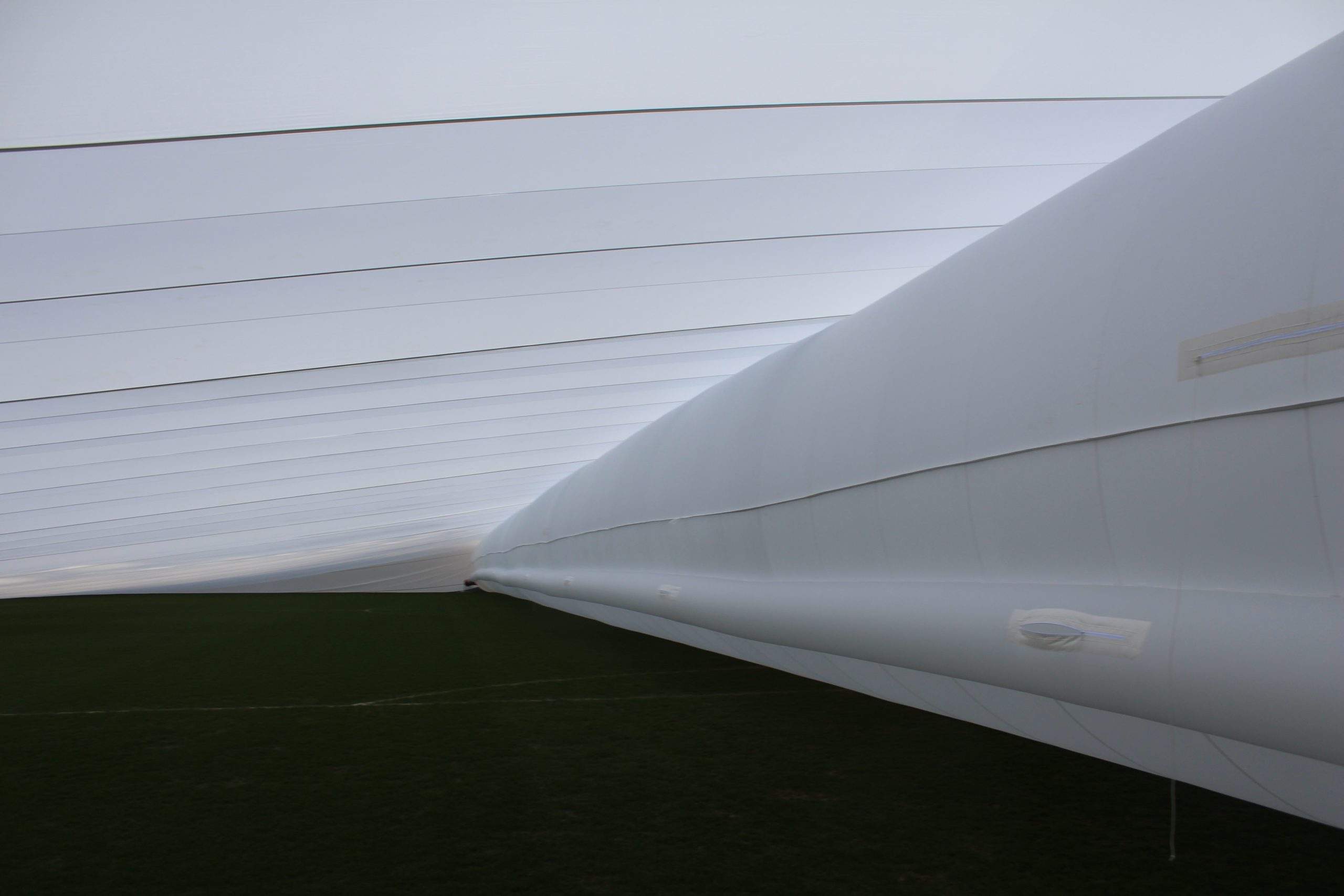
The MacLeod Pitch Cover is designed as an all-encompassing playing surface management tool in its own right, providing protection against adverse weather while creating a controlled environment that can support temperature management, recovery and growth.
For many venues, this means the system can address the majority of their winter pitch protection and management requirements as a standalone solution. However, where clubs have already invested in other industry-standard technologies, including undersoil heating, stitched or hybrid playing surfaces and supplementary grow lighting, the MacLeod pitch cover can also work alongside them as part of an integrated pitch-management strategy. The MacLeod can operate alongside these systems and, importantly, allow their respective benefits to compound rather than simply coexist.
At Green Bay Packers and Toronto, for example, the MacLeod forms a key part of an integrated pitch-management strategy, working alongside the other technologies and practices employed by their grounds teams.
Undersoil heating can provide heat from below while the raised cover helps retain that energy above the surface, maximising efficiency and reducing time needed to reach and maintain temperature. Grow lighting can support targeted growth programmes, while the MacLeod pitch cover helps create and maintain temperature and Co2 meaning these limiting factors don’t plateau growth. Hybrid and stitched surfaces provide greater structural resilience, while the MacLeod helps protect the conditions in which the natural grass component must continue to perform and recover.
This flexibility is important. Every stadium has a different pitch profile, climate, event schedule and existing infrastructure. as a comprehensive management tool in its own right, or as the platform around which complementary pitch technologies can work together more effectively.
Installation & commissioning a bespoke pitch protection system
A team from Sports & Stadia installed and commissioned the system at Deepdale, working alongside Peter Ashworth and the club’s ground staff. Commissioning is a critical part of any pitch protection system handover, ensuring the club understands safe operation, deployment routines, and how to get the best performance from the system in real-world conditions.
As part of the handover, Sports & Stadia provided hands-on training, demonstrating full installation, servicing, and removal, sharing knowledge and experience so Preston’s staff can work confidently with the system.
”We are delighted to take ownership of a new bespoke MacLeod Cover for Deepdale. I look forward to utilising the MacLeod Cover to control and effect the micro-climate thereby enhancing the quality of the playing surface over the coming years. Good to work with Sports & Stadia and their team demonstrating the ease and operation of the system.
Peter AshworthHead Groundsperson
Operational deployment
For many clubs, the practical questions matter as much as the technical ones: how quickly can the system be deployed, how many people are required, and how reliably can it be used when weather changes at short notice?
A well-planned deployment process helps the grounds team respond to forecasts, protect the surface when required, and return the pitch to match-ready presentation efficiently. Operational best practice typically includes clear triggers for deployment, defined roles for staff, and routine checks to ensure the system is ready to use throughout the season.
At Deepdale, the venue is well suited to the system. Typically, four trained staff can install the system in under two hours, with removal in under one hour (weather dependent).
A key driver for ownership was certainty of access. Preston could not guarantee access to the system under the EFL agreement, as Leagues One and Two were assessed as higher risk due to the volume of televised matches, including four televised matches every Saturday lunchtime. System allocation was not guaranteed.
How pitch covers manage micro-climate & playing surface quality
Beyond basic protection, football pitch covers can support more consistent management of the conditions immediately around the turf, particularly during winter periods when heavy usage, frost risk, low soil temperatures and light levels can affect surface performance.
By helping the grounds team manage exposure to harsh weather, pitch covers can contribute to improved surface consistency and support the club’s wider objectives for pitch quality. The exact outcomes depend on how the system is used, the stadium environment, and the club’s maintenance programme, but the intent is always the same: protect the asset and support confident decision-making around fixtures.
There is a scheduling benefit to this as well. A surface held in better condition through the winter gives the club more room to make decisions about how the pitch is used between fixtures, rather than protecting it by keeping it empty.
At Deepdale, early benefits have already been seen: at least two matches avoided any thoughts of postponement, as rainfall was controlled.
Best practice is to be proactive, deploying the system prior to forecasted inclement weather, to help control the micro-climate at the stadium or training venue, rather than reacting once conditions have already deteriorated.