



Why stadium turf protection matters for 24-hour turnarounds (MLS to NFL)
Multi-use stadiums face a unique operational challenge: the playing surface has to perform consistently even when schedules are compressed and weather conditions are unpredictable. When a venue is hosting different sports codes in close succession, the grounds team needs reliable systems that protect the surface and support fast, repeatable changeovers.
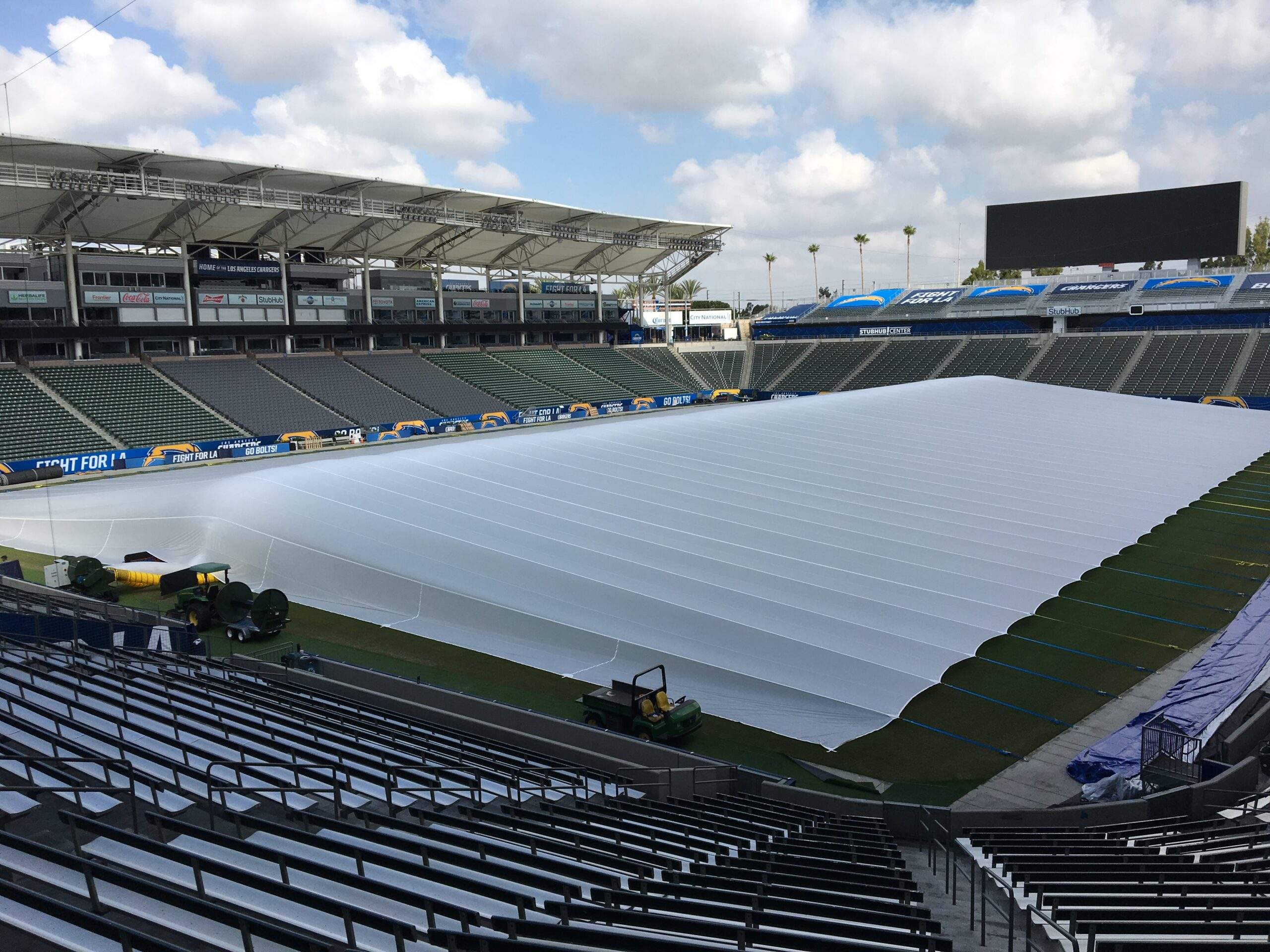
Sports & Stadia are pleased to announce the 4th installation into the North American market of the MacLeod Field Protection System. Installed at the StubHub Center, Los Angeles in late September, the system supports the groundstaff in managing tight turnarounds during wet weather, helping protect the surface when transitioning from LA Galaxy MLS fixtures to Los Angeles Chargers NFL fixtures within a 24-hour window.
The challenge: wet weather, surface protection & rapid turnarounds
Wet weather creates more than a risk of surface damage. In a multi-use stadium, heavy or persistent rainfall can threaten playing conditions, delay recovery and, crucially, disrupt the tight turnaround between different sporting events.
Flat covers, traditionally a lot heavier, provide a barrier against rainfall, but the water falling onto them still has to be managed. Water naturally pools towards low and susceptible areas of the pitch, creating significant weight and downward pressure on the surface below. In severe rainfall, this can become a compounding problem: accumulated water above the cover can place pressure on the profile beneath, encouraging latent moisture within an already saturated surface back towards the top. In extreme conditions, the volume and weight of water can also make the flat cover difficult, or potentially impossible, to remove until it has first been pumped, dispersed or cleared.
This creates another operational challenge. Before a flat cover can be removed, accumulated water must be cleared, making removal a potentially long and labour-intensive process precisely when stadium teams are working against the clock.
The MacLeod Cover changes this dynamic.
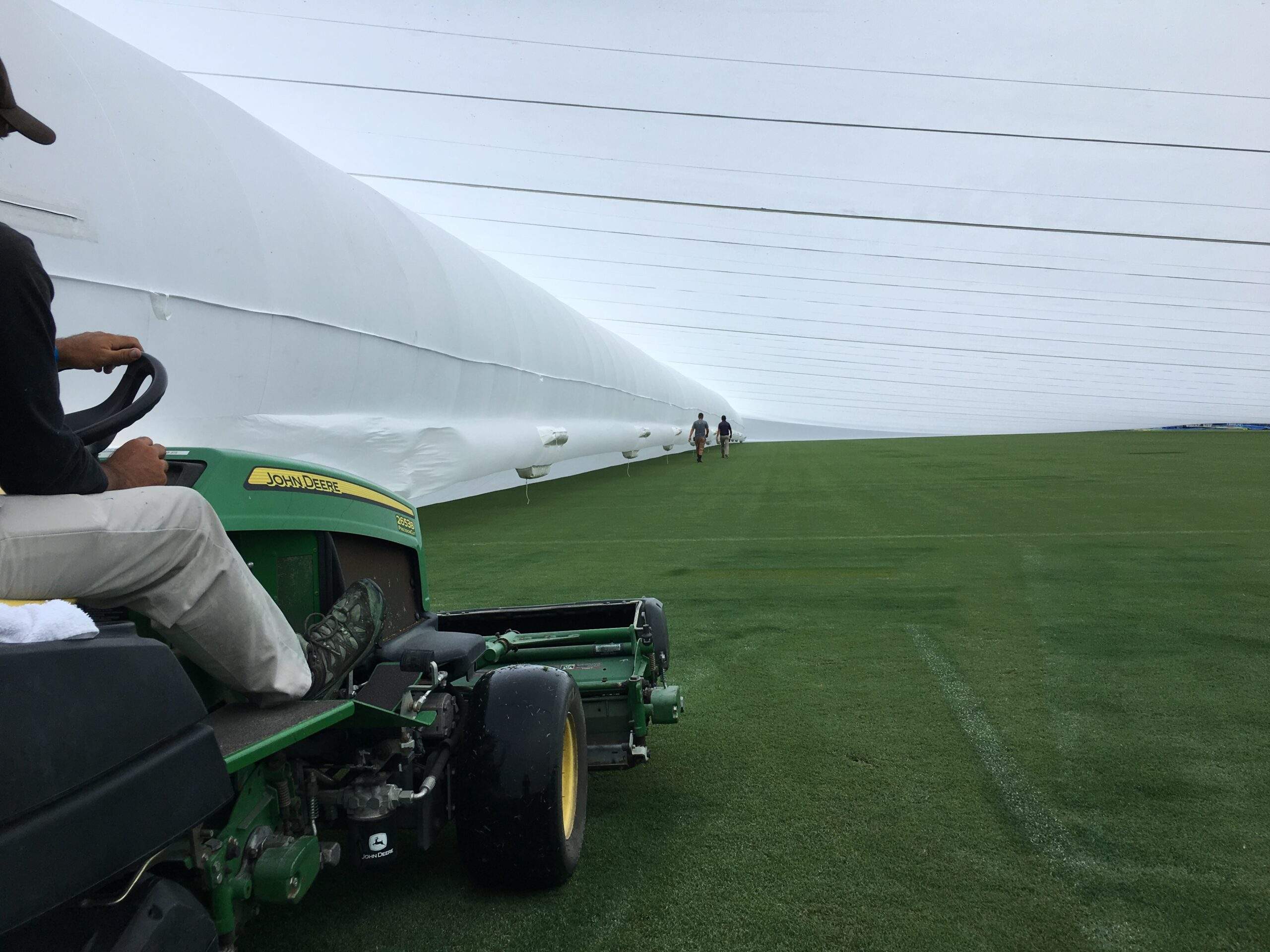
Because the cover is raised above the playing surface and held in a continuous apex profile, rainfall is shed away to the pitch perimeter while the system is in operation. Rather than allowing water to accumulate on the cover and creating a separate clean-up operation before removal, the system continually self-manages rainfall as it arrives.
When the weather window opens, the cover is therefore ready to be removed without first having to clear large volumes of standing water. For multi-use venues with short changeover periods, that can significantly shorten and de-risk the transition from pitch protection to the next sporting operation.
The benefit becomes a virtuous cycle: the pitch remains protected and able to recover beneath the system; staff spend less time manually managing water and clearing covers; removal becomes faster and more predictable; and the system can be deployed proactively and persistently as a management tool rather than being reserved only for worst-case conditions.
Ultimately, the MacLeod field cover is not simply keeping rainfall off the playing surface. It is protecting the time available to the stadium team as well as the pitch itself. At time of purchase this was a key consideration for ground staff in LA.
Why a raised field protection system (and where flat covers may fall short)
The distinction between flat and raised protection is not simply how the cover sits on the pitch, but how the system supports the wider operation of the venue.
Flat covers can provide an effective temporary barrier between rainfall and the playing surface. However, their effectiveness is heavily dependent on active management, particularly during prolonged or intense rainfall. This can demand significant staff resource at exactly the point when a stadium is preparing for its next event.
A raised MacLeod system is designed differently. By creating a protected environment above the playing surface, it allows protection, recovery and stadium operations to continue simultaneously. The system can remain deployed through sustained periods of poor weather while the grounds team focuses resources elsewhere.
For venues managing frequent sporting changeovers, this creates an important operational advantage. Deployment becomes less about responding to a worst-case weather event and more about proactively controlling the conditions around the playing surface.
The result is greater certainty over the condition and availability of the pitch, more efficient use of staff, and higher confidence and control when planning tight event schedules.
Rather than covers and field protection being an additional operational burden, continued use of the MacLeod cover becomes part of the solution: improving the environment beneath the cover while reducing the resources required to manage the weather above it.
Installation & commissioning at the StubHub Center (Los Angeles)
Installation and commissioning is where a field protection system becomes operational. Beyond the physical installation, commissioning ensures the groundstaff are confident in safe handling, deployment routines, and the checks that keep the system performing throughout the season.
Each installation is also shaped by the venue itself, field dimensions, access routes, storage constraints, and the stadium’s event calendar all influence how the system is configured and operated.
Operational deployment: staffing, deployment time, and matchday routines
- How quickly can the system be deployed and retrieved?
- How many staff are needed?
- What does a “standard” wet-weather routine look like?
A well-designed field protection approach supports operational planning and reduces last-minute pressure. Clear deployment triggers, defined roles, and routine checks help ensure the system can be used effectively whenever conditions require it.
Outcomes: protecting the surface & improving decision-making in wet weather
The purpose of a stadium turf protection system is to protect the playing surface when conditions threaten playability and recovery time is limited. In multi-use venues, that protection supports not only turf health but also decision-making, helping the stadium manage risk and maintain consistent standards across a demanding schedule.